Automation economics
AI Automation ROI Calculator
A transparent calculation model for estimating time value, break-even volume, and the costs most automation proposals leave out.
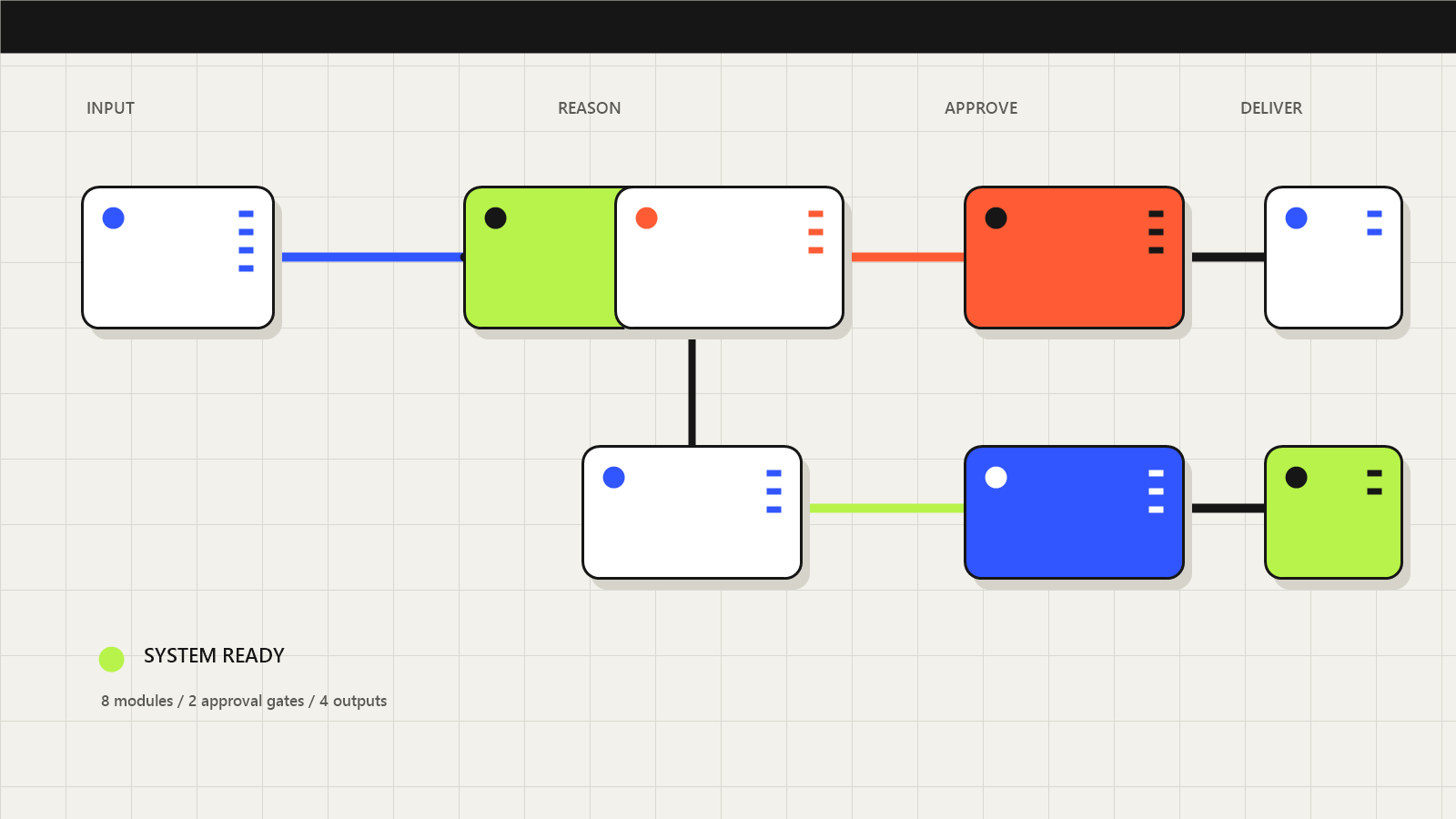
Model monthly value before implementation
Use the calculator as a planning range. It estimates the labor value of time recovered and subtracts recurring software cost. A complete business case should also include implementation, maintenance, quality review, change management, and the cost of errors.
The basic automation ROI formula
Monthly labor value equals weekly task volume multiplied by minutes saved per task, multiplied by four weeks, divided by sixty, then multiplied by loaded hourly cost.
For a full-year business case, subtract one-time implementation cost, expected maintenance, review labor, training, and the expected cost of errors. Use conservative, base, and optimistic scenarios instead of one precise-looking number.
Choose inputs that can survive review
| Input | Good evidence | Common mistake |
|---|---|---|
| Task volume | System logs or representative sampling | Using the busiest week |
| Minutes saved | Before/after observation including review | Ignoring exception handling |
| Loaded hourly cost | Salary, benefits, overhead, contractor rate | Using revenue per employee |
| Software cost | Seats, usage, model calls, storage | Using the entry plan only |
| Error cost | Rework, refunds, delay, compliance impact | Assuming automation quality is perfect |
Include the costs hidden by simple calculators
Implementation time includes process mapping, data cleanup, integration, testing, security review, documentation, and training. Maintenance includes tool changes, broken fields, policy updates, prompt revisions, monitoring, and incident response.
Quality review is not waste. It is part of the operating cost of an automated decision system. Include sampled review for mature workflows and full review for high-risk outputs.
Use decision thresholds, not enthusiasm
A promising pilot usually has enough volume, a stable process, measurable manual effort, reversible actions, accessible data, and a named owner. A weak candidate has rare tasks, constantly changing policy, unclear quality standards, or consequences that cannot be reversed.
Require a payback range rather than an arbitrary ROI multiple. A small workflow may still be worthwhile if it removes delays, improves auditability, or protects a critical customer experience.
Worked example
A support team handles 200 repetitive requests each week. A triage workflow saves 8 minutes per request after including human review. Loaded labor cost is $32 per hour and software costs $180 per month.
The modeled monthly labor value is 200 × 8 × 4 ÷ 60 × $32 = approximately $3,413. After software, the monthly net planning value is approximately $3,233 before implementation, maintenance, and error cost.
If implementation requires 80 hours at the same loaded cost, the one-time labor cost is $2,560. Under the base assumptions, the payback period is under one month, but the decision still depends on quality, risk, and whether the recovered capacity can be used.
Frequently asked questions
What is a good automation ROI?
There is no universal threshold. Compare the return with implementation risk, competing priorities, payback time, and strategic value.
Should revenue gains be included?
Only when there is evidence that the workflow changes conversion, capacity, retention, or speed. Keep speculative revenue separate from measured labor value.
How often should the model be updated?
Update after the pilot, when pricing or volume changes, and whenever the workflow adds new review or exception work.
Turn this guide into your own workflow.
Use the free scenario builder to choose a function, approval model, and weekly volume.